Your visit opens beneath a carved 19th-century wooden ceiling, welcomed by "The Seven Liberal Arts," one of the museum's finest tapestries. It's a grand first impression that sets the tone before the route narrows into smaller, more intimate palace rooms.
Location: Ground floor, right after ticketing.
Experience the best of Gruuthusemuseum
Crafted by Headout, a global experiences brand offering curated tours, tickets & experiences. Discover with ease, book with peace.Loved by over 57 million guests worldwide
How Headout makes choosing experiences effortless
We curate the best ways to experience
We research and organise all unique experiences - from tickets to tours to special combos - so you get all the choices without the clutter.
We partner with the best
Every supplier is vetted for quality, reliability, and value so you only get top rated experiences. No surprises, no disappointments.
All the best options, in one place
Each experience is thoughtfully organised to give you maximum availability, great value and an easy way to choose.
Book with complete peace of mind
Free cancellations, Flexible payments, and 24/7 support - thoughtfully designed for flexibility, assurance, and total peace of mind.
Slide 1 of 41/4
Slide 1 of 4
How to visit Gruuthusemuseum
- Ways to explore: Standard self-guided ticket grants entry to the former city palace, letting you explore its rooms, collections, and the historic oratory at your own pace.
- Additional access: Your ticket also includes access to the museum's balcony, with panoramic views over Bruges and the Church of Our Lady.
- When to book: Gruuthusemuseum is less scarcity-driven than Bruges' biggest icons, but it's still worth booking 2 weeks ahead for weekends, peak summer months, holidays, or if you're set on a specific day.
- Good to know: Plan for 1 to 2 hours. The museum is closed on Wednesdays and involves stairs throughout with no lift, so mobility-impaired visitors should plan accordingly.
- Accessibility: The museum involves numerous stairs and level changes, so it isn't suited to visitors with mobility impairments.
- Booking flexibility: This ticket can't be cancelled or rescheduled, so confirm your visit date before booking.
What to expect at Gruuthusemuseum
1/6
Enter the palace
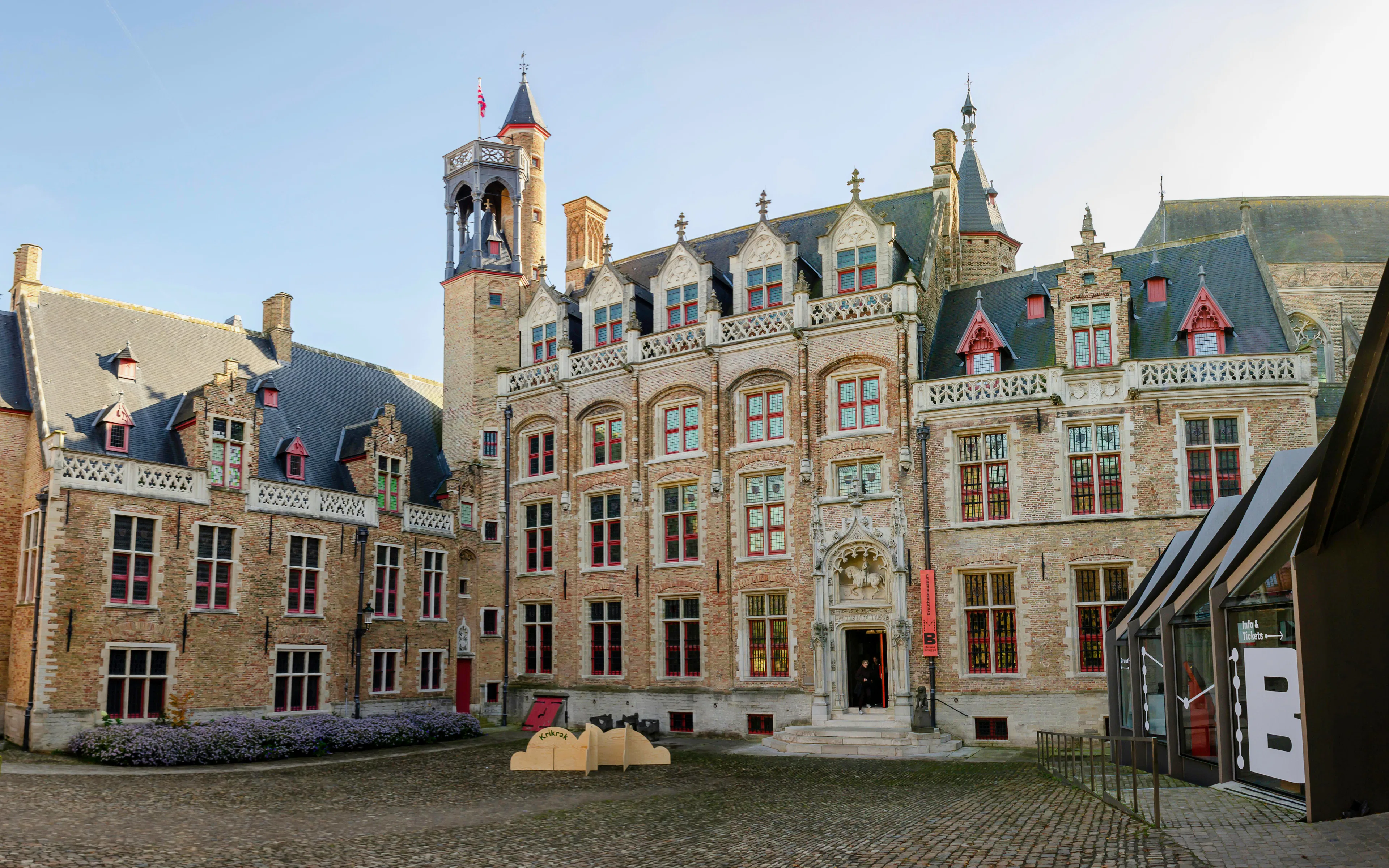
Step into a late-medieval Bruges city palace, where carved woodwork, fireplaces, and decorated chambers matter as much as the objects. Unlike a neutral gallery, this route lets you read the building itself as part of the collection.
Meet Louis of Gruuthuse
Early rooms introduce Louis of Gruuthuse, the palace's best-known resident, through a palace model, portrait, and Burgundian backstory. Spend a few minutes here first, because later manuscripts, devotional spaces, and status objects make more sense afterward.
Rooms that build the story
From there, the route opens into a collection of over 600 objects — tapestries, stained glass, wooden sculpture, lace, silver, ceramics, and Chinese porcelain. The museum spans Bruges' Burgundian age, later centuries, and neo-Gothic revival, while MB Explorer audio, included, adds context without guesswork.
The oratory moment
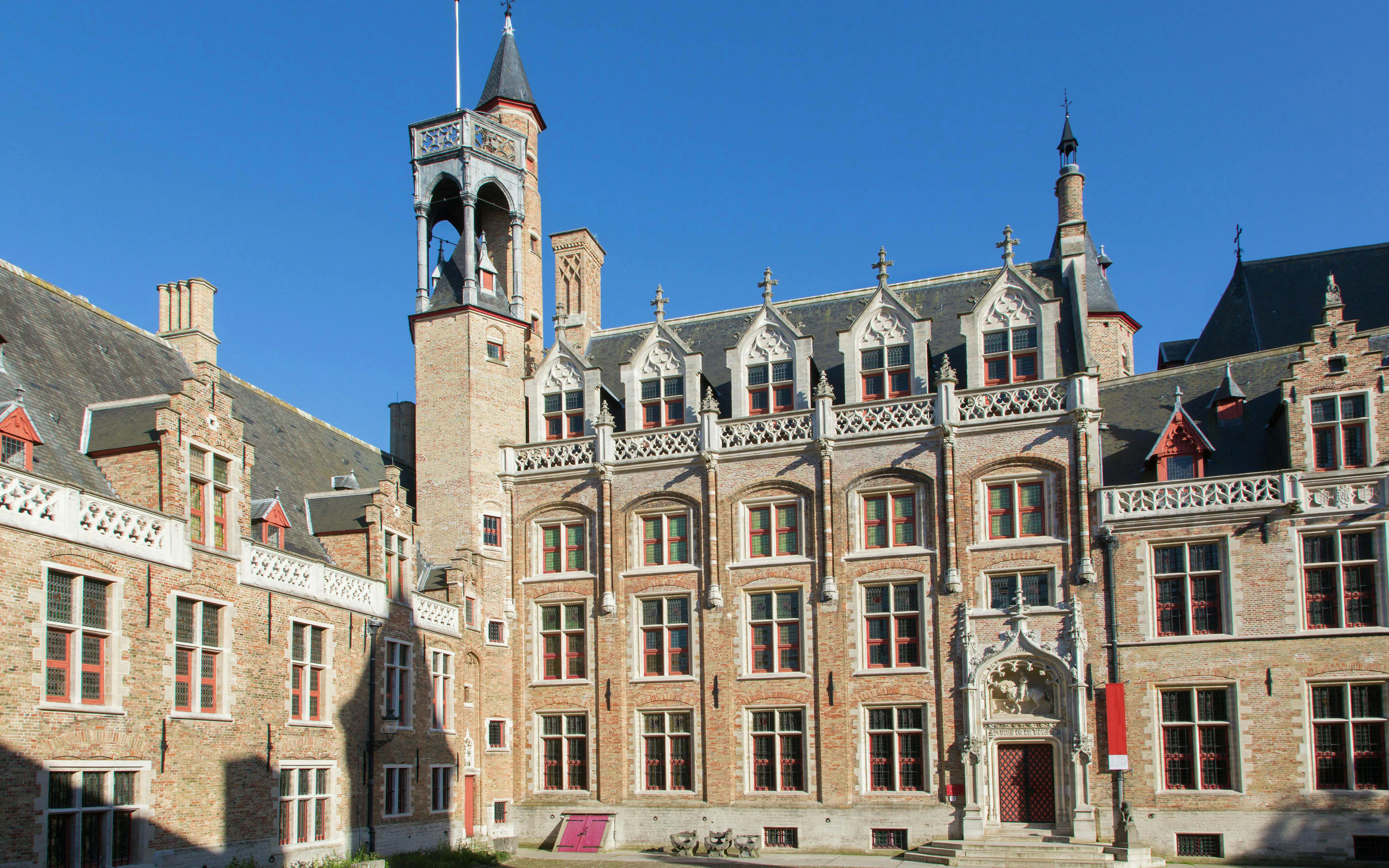
The emotional peak is Louis's authentic late-15th-century private oratory, suspended between palace and church life. Look through its opening toward the Gothic chancel of the Church of Our Lady, and linger a little, because groups can briefly crowd this compact space.
Balcony and Studio+
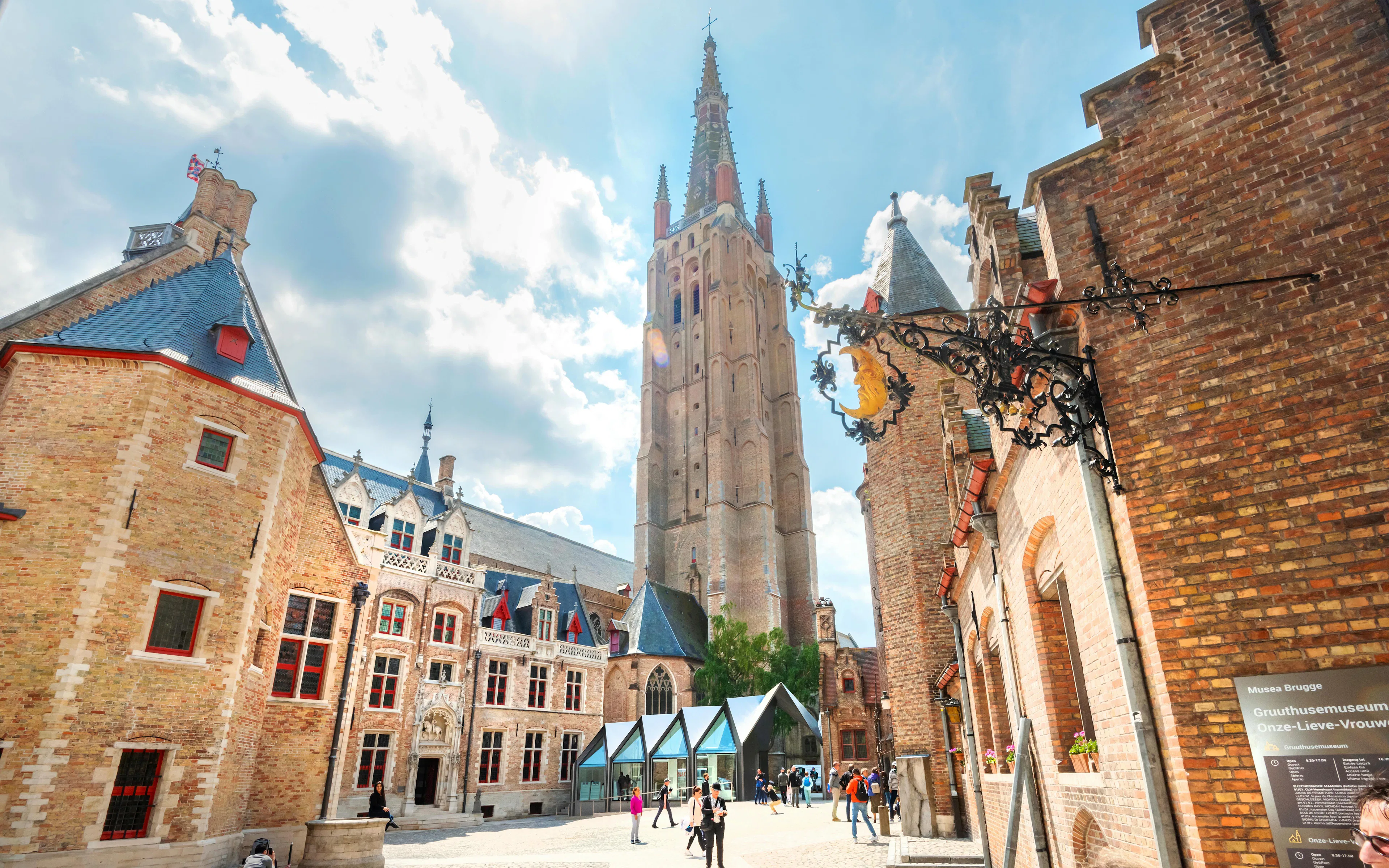
Near the end, step onto the balcony for a close view over the Church of Our Lady precinct, canal edges, and one of Bruges' postcard bridges. Studio+ follows with seating and books, giving the visit a calm final beat after 1–2 hours inside.
Plan around the visit, not a queue
There's no separate fast-track lane here, so a booked ticket buys you a calm, unhurried visit rather than time saved at the door. If you'd rather have context than an audio guide, an official Musea Brugge guide can walk your group of up to 15 through the collection in 90 minutes — it's the only way to bring a guide inside, since outside guides aren't permitted in the museum.
Things to know before booking your Gruuthusemuseum tickets
Booking window
Book at least two weeks ahead, especially during peak summer season (June–August), when Bruges sees its heaviest visitor traffic. Same-day tickets are usually available, but booking early takes the guesswork out of your trip. Last entry is 30 minutes before closing.
Entrances and queues
All visitors check in at the modern museum pavilion in the Gruuthuse courtyard, then continue into the historic palace for the actual museum route. Expect narrow circulation and stairs once inside, rather than a queue at the door.
What’s included
- Standard entry covers the full palace route, the 15th-century oratory, the balcony viewpoint, and the period rooms, along with the free MB Explorer digital audio.
- Entry does not include the Museum of the Church of Our Lady next door
Ways to explore
- Explore the museum with the included MB Explorer digital audio, which adds context as you go — bring a charged phone and headphones.
- Don't rush toward the exit once you've seen the main rooms. The oratory and balcony come near the end of the route, and they're worth lingering at rather than rushing past.
Policies
- The museum is not wheelchair accessible and has no visitor lift. The route includes multiple floors, level changes, and steep historic stairs, so treat this as a booking filter.
- Food and drink aren't allowed inside, and photography is fine as long as you skip the flash and tripod.
- Only handbags smaller than 34 x 22 cm are allowed inside. Staff may also ask to inspect bags at entry.
- Children under 13 enter free, though a free reservation may be required in some booking flows. Companions of visitors who cannot visit independently enter free.
Galleries at Gruuthusemuseum

The Entrance Hall

Louis of Gruuthuse and the Burgundian World
Early rooms introduce Louis of Gruuthuse through his portrait, a palace model, and Burgundian-era objects and manuscripts. This cluster frames the rest of the visit, giving context to the status, devotion, and courtly life explored in later rooms.
Location: Early in the route, just after the entrance hall.

Decorative Arts Through the Palace
Tapestries, stained glass, wooden sculpture, lace, and Chinese porcelain are spread across the palace's period rooms, tracing Bruges' story from its Burgundian prosperity through the 17th and 18th centuries. Expect a mix of grand chambers and quieter, more intimate spaces.
Location: Spread across the palace's mid-route rooms.

Louis of Gruuthuse's Private Oratory
The route's high point: a compact, elevated 15th-century chapel connecting the palace directly to the Church of Our Lady, with a view straight into its Gothic chancel. Foot traffic slows here, so expect a brief pause before continuing.
Location: Reached via Room 14, ahead of the museum's later rooms.

19th-Century Neo-Gothic Rooms and Studio+
The final stretch of the route tracks Bruges' 19th-century reinvention as a neo-Gothic heritage city, before ending at Studio+ — a calmer space with seating and books to close out the visit.
Location: Final rooms of the route, ending at Studio+
Must-see artworks at Gruuthusemuseum
1/13
The Seven Liberal Arts Tapestry
This 17th-century tapestry, woven after a design by Cornelis Schut, shows how Bruges' elites displayed wealth, warmth, and storytelling all at once in a single room.
Pro tip: Step back so the full border reads together with the scene.
Neo-Gothic Interiors
These 19th-century additions to the palace show how Bruges reimagined its own medieval image during the era's neo-Gothic revival.
Pro tip: Compare the wall and woodwork details from doorway distance to take in the full effect.
Historic Furniture
Pieces of period furniture throughout the palace make the rooms feel genuinely lived-in rather than staged for display.
Pro tip: View from a corner angle to judge the depth and scale of each piece.
Chinese Porcelain
These imported pieces widen the museum's story beyond Bruges' own workshops and into the reach of global trade.
Pro tip: Stand back a little to take in the shape before studying the surface detail.
Silverwork
Polished silver objects reflect the finish expected in wealthy interiors and formal ceremonies of the period.
Pro tip: Angle yourself slightly away from the case to avoid glare.
Historic Bruges Lace
The lace displays connect Bruges' most famous craft to the labour, trade, and identity built around it.
Pro tip: Move in close for the pattern detail, then step back to appreciate the overall rhythm.
Burgundian Manuscripts
These 15th-century manuscripts connect Bruges to the elite reading culture of the Burgundian court.
Pro tip: Face the display case head-on to reduce glass reflections.
Wooden Religious Figures
These carved sculptures show the skill of Bruges' workshops in turning wood into expressive, sacred imagery.
Pro tip: View from the side to properly read the depth of the carving.
Stained-Glass Panels
These panels reveal the colour and craftsmanship that once shaped devotional interiors across the city.
Pro tip: Shift slightly from side to side to catch how the light changes across the glass.
Monumental Tapestries
Large-scale tapestries throughout the palace show how elites used textiles to display wealth, warmth, and narrative all in one object.
Pro tip: Step back so the full border reads together with the central scene.
Louis of Gruuthuse's Private Oratory
This late-15th-century chapel connects noble life directly to worship. Look through the opening toward the Church of Our Lady's chancel to understand Louis' privileged vantage point during services.
Pro tip: Wait for a clear gap in the crowd, then view straight through the opening.
Portrait of Louis of Gruuthuse
This portrait, painted around 1480, anchors the entire palace story in one man's wealth and devotion. Notice the rosary, the rich clothing, and the controlled pose, all signalling rank and piety.
Pro tip: Stand close to catch the detail in the rosary and fabric.
Palace Model
This scale model helps you read the museum as a genuine former residence rather than a neutral gallery space. Notice how the rooms, circulation, and church connection shape the entire visit.
Pro tip: View it before climbing the stairs, so the layout stays with you through the rest of the route.
Plan your visit to Gruuthusemuseum

- Hours: Open 9:30am–5pm.
- Closed day: Closed on Wednesdays.
- Holiday hours: December 24 and December 31, the museum closes at 4pm.
- Holiday closures: Closed on December 25 and January 1.
- Special hours: On Ascension Day, the museum closes at 12:30pm.
- Late entry: Last admission is normally 30 minutes before closing, but staff may stop entry earlier.
Address: Dijver 17C, 8000 Brugge, Belgium | View on Google Maps
Neighbourhood: Sits beside the Church of Our Lady in Bruges' historic museum quarter.
Getting there
- Train: From Bruges railway station, walk into the historic center toward the Church of Our Lady/Dijver museum quarter.
- Bus: Alight at Brugge O.L.V. Kerk, then follow the guide line to the church wall and turn toward the Gruuthuse pavilion.
- Car/Parking: Nearest car park is Pandreitje, a short walk from the museum.

- Museum pavilion (Gruuthuse Courtyard): Ticketing hub before entering the historic palace — buy or sort tickets here first.
- Historic palace entrance: Beyond the courtyard, serves museum entry; waits depend on bag checks; stairs only, with no lift.
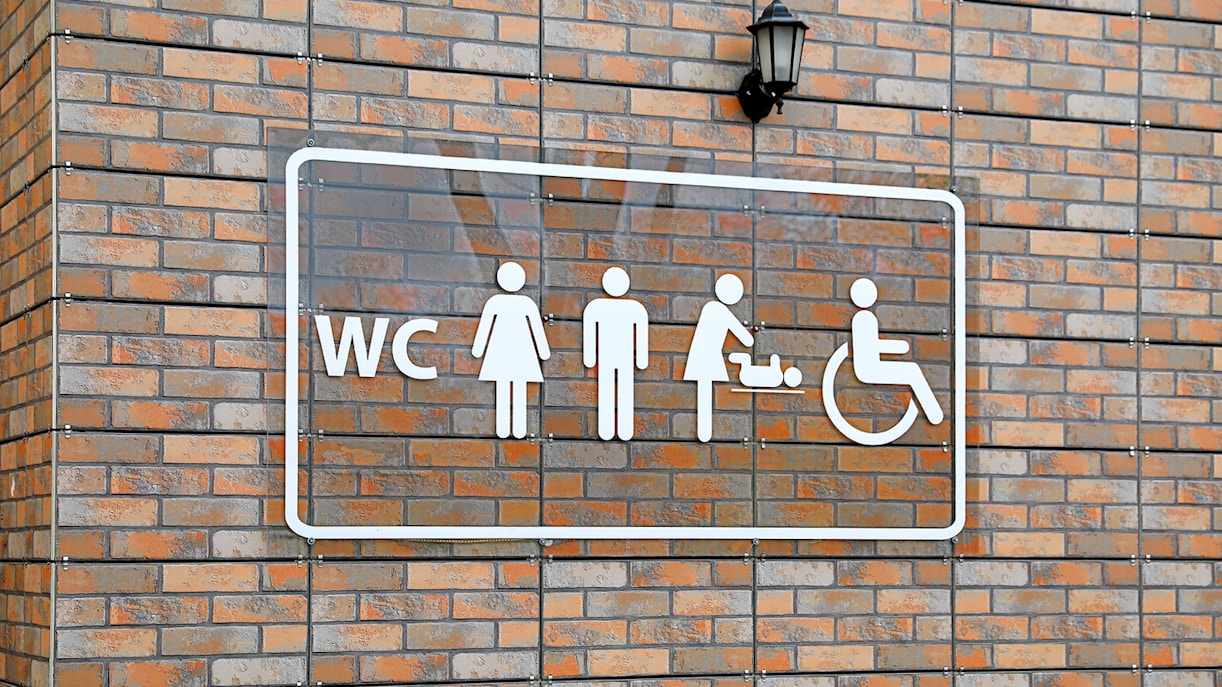
- Cloakroom/lockers: Bags over the 34 x 22 cm size limit can be left in the free cloakroom or lockers.
- Audio guide: The free MB Explorer digital audio adds context throughout — bring a charged phone and headphones.
- Toilets: An adapted, accessible toilet is available via the pavilion, reached with assistance.
- Seating: Studio+ offers seating near the end of the route.
- Family support: Toys and a nappy-changing table are listed in current visitor information.

- Vision support: Descriptive audio, tactile stations, and a tactile model support visitors with visual impairments.
- Hearing support: Text versions, Flemish Sign Language, and International Sign are available for guided content.
- Sensory support: Sensory kits, resting points, folding chairs, and walking sticks are available.
- Toilets: An adapted toilet can be reached with assistance through the pavilion route.
- Wheelchair access: Gruuthusemuseum is not wheelchair accessible — the historic building has multiple floors, level changes, and stairs throughout, with no lift.

- Food & drink: Food and drinks are not allowed inside the museum.
- Bags: Only handbags smaller than 34 × 22 cm are allowed inside. Larger bags can be left in the free cloakroom.
- Photography: Photography without flash is allowed unless otherwise indicated by signage.
- Equipment: Tripods are not allowed inside the museum.
- Late arrival: Entry and ticket sales may close before the official closing time, so allow enough time to enter and explore.
Visitor tips
- Start in the pavilion with the tactile model of the Gruuthuse site; it clarifies the palace–Church of Our Lady layout before sightlines fragment inside.
- Begin the palace route at the Louis de Gruuthuse portrait and palace model; they anchor the story before the collection expands across three floors.
- Aim for the private oratory in the first or last opening hour; its compact viewing opening into the church chancel bottlenecks quickly when groups arrive.
- At the oratory, stand one step back from the opening; the wider angle reads the Gothic chancel more clearly through the grille.
- Don’t save the balcony for the end; backtracking later means repeating narrow stairs in a building with frequent level changes and no elevator.
- Use the balcony for your Bruges overview; seeing the Church of Our Lady precinct and the Bonifacius bridge outside makes the palace–church connection easier to follow indoors.
- Slow down at the tapestry and lace displays; subdued lighting protects textiles but makes quick label scanning harder.
- Let faster visitors pass on the spiral stairs between rooms; tight landings jam quickly once two-way traffic builds.
- Pause in Studio+ after the balcony, not before; seated downtime lands better once the stair-heavy route has accumulated.
Frequently asked questions about Gruuthusemuseum tickets
Yes. Advance booking is sensible, especially on weekends, holidays, and rainy days. On-site purchase is available, but prebooking saves ticket-counter time and protects your plan if late-day admissions are limited before closing.
Your ticket is dated for a specific day. While a strict timed-entry window isn’t enforced, arriving late in the afternoon risks shortened entry or refusal close to closing time.
Yes, tickets can be bought on-site at the museum pavilion or other Musea Brugge counters. However, for convenience and to secure your preferred slot, it’s best to buy online and in advance.
Your ticket includes one-day access to the Gruuthusemuseum’s full permanent collection and any temporary exhibitions. It also covers access to all public areas, including the private oratory and the balcony with views over Bruges.
Yes. A free audio tour is available via QR code in Dutch, French, German, English, Spanish, and Italian. Bring your own earphones for the best experience; the audio tour is independent of your entry ticket.
All sales are final; tickets are non-refundable and cannot be exchanged once purchased. If the museum closes unexpectedly, official policy provides alternative arrangements via Musea Brugge.
No. Re-entry is not permitted. Plan your visit as one continuous route; if you want a break, take it before entering the palace galleries.
Most visitors spend 1–1.5 hours exploring the highlights at a comfortable pace. A slower, more detailed visit with the audio tour can take up to 2 hours.
The museum is open daily from 9:30 a.m. to 5:00 p.m., closed on Wednesdays. Holiday exceptions apply (e.g., closed 25 Dec and 1 Jan; early closure on 24 and 31 Dec and Ascension Day).