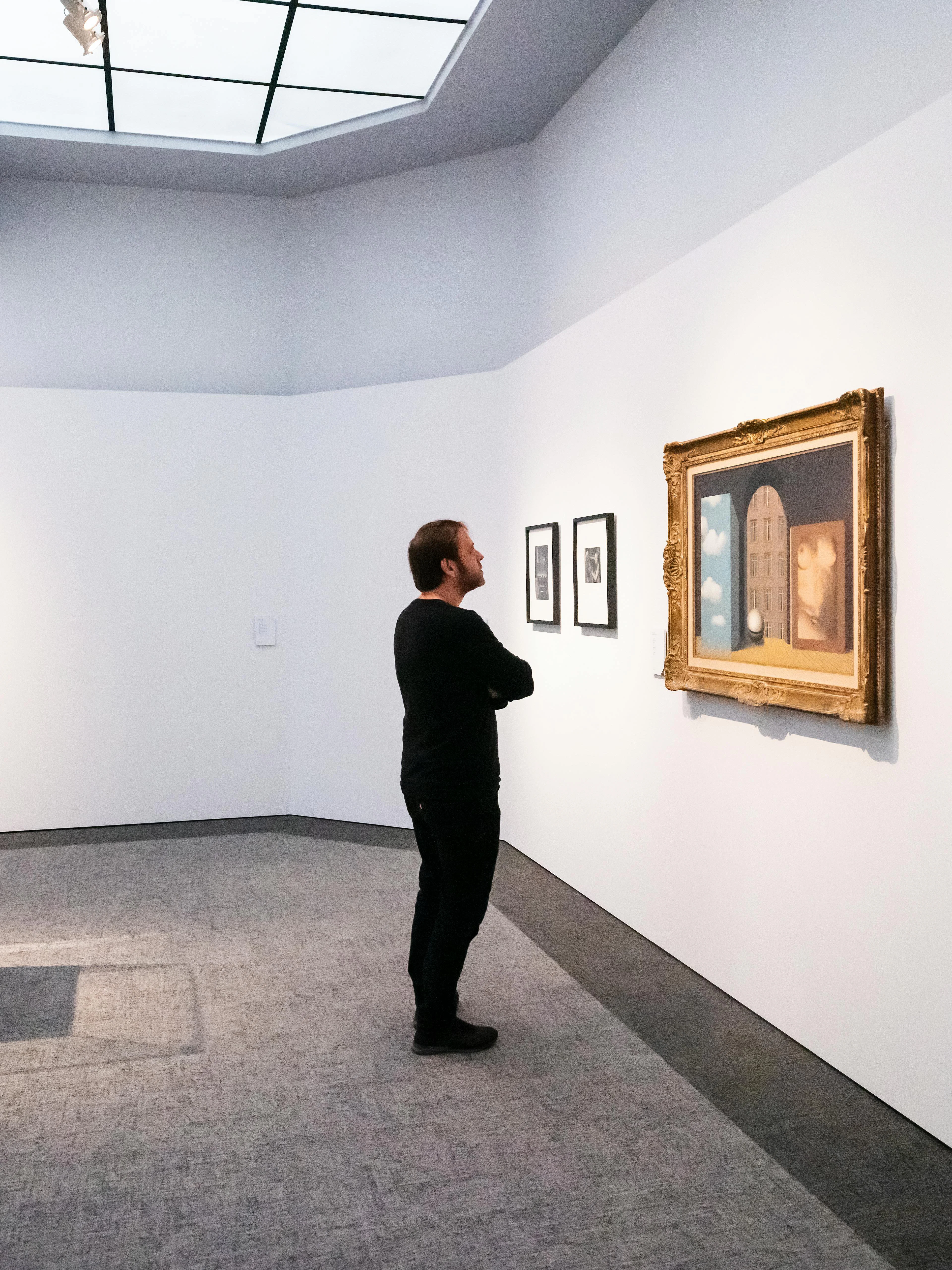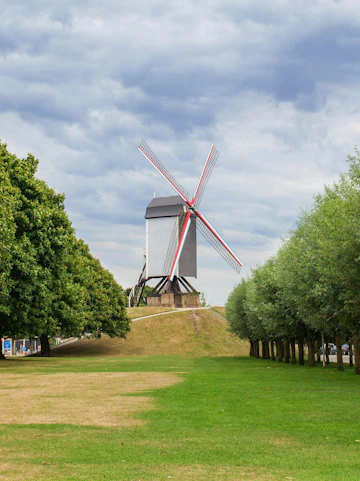
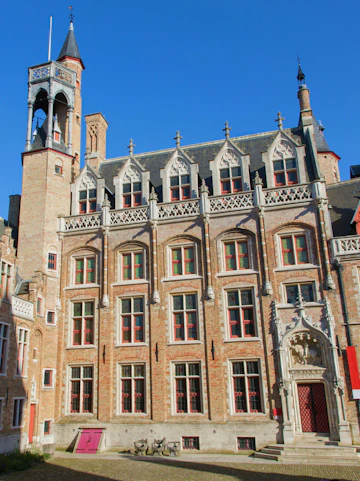
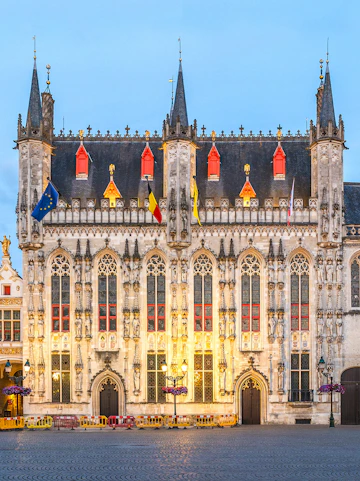
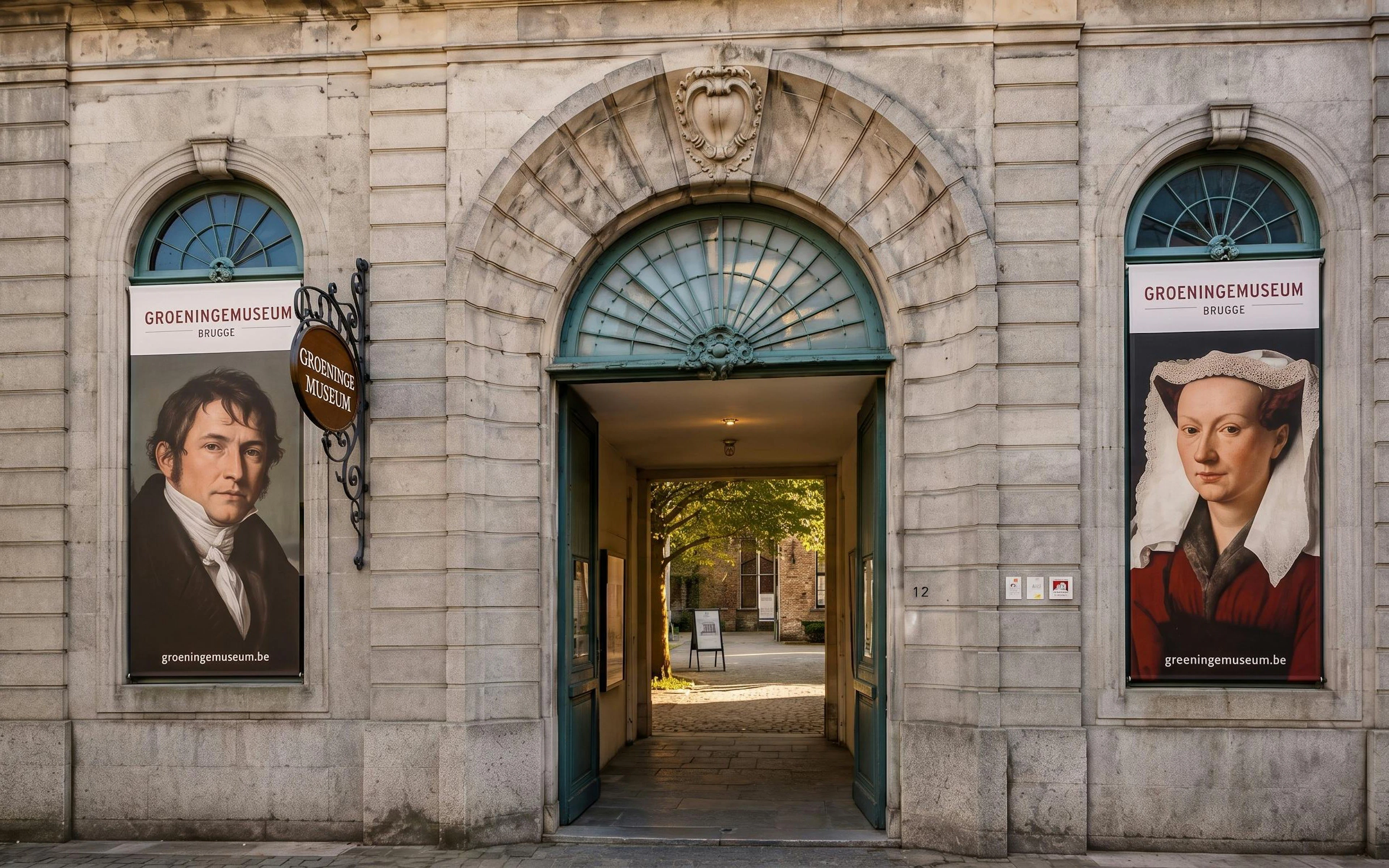
Located on the main gallery circuit, these intimate rooms highlight 15th- and 16th-century panel paintings. Experience world-renowned masterpieces by Jan van Eyck and Hans Memling set within historic, naturally lit spaces.
Experience the best of Groeningemuseum
Crafted by Headout, a global experiences brand offering curated tours, tickets & experiences. Discover with ease, book with peace.Loved by over 57 million guests worldwide
Headout is an authorized and trusted partner of this venue
Closing from January 11, 2027
Groeningemuseum is scheduled to close on January 11, 2027 for a four-year refurbishment. During the closure, the heart of the Groeninge Collection will be shown at BRUSK.
How Headout makes choosing experiences effortless
We curate the best ways to experience
We research and organise all unique experiences - from tickets to tours to special combos - so you get all the choices without the clutter.
We partner with the best
Every supplier is vetted for quality, reliability, and value so you only get top rated experiences. No surprises, no disappointments.
All the best options, in one place
Each experience is thoughtfully organised to give you maximum availability, great value and an easy way to choose.
Book with complete peace of mind
Free cancellations, Flexible payments, and 24/7 support - thoughtfully designed for flexibility, assurance, and total peace of mind.
Slide 1 of 41/4
Slide 1 of 4
Quick overview
- Ticket options: This Groeningemuseum collection currently includes standard self-guided entry only; MB Explorer is available free on-site by QR code.
- When to book: Book ahead if visiting before the planned 11 January closure; arrive near opening and pack light for a smoother entry.
- Good to know: A standard visit takes about 1.5 hours; online tickets cannot be changed, exchanged, or cancelled after payment.
- Best upgrade: If you plan multiple museums in Bruges in 72 hours, the Musea Brugge Card is the strongest alternative; for one stop, standard entry is simpler.
What to expect at the Groeningemuseum
1/6
Enter a compact collection
Step into Bruges’ municipal fine-arts museum and move room by room through six centuries of Belgian art. The scale feels focused, not sprawling, which is why many visitors finish in about 1.5 hours rather than losing half a day.
Start with Flemish Primitives
The opening galleries are the museum’s strongest draw, with Jan van Eyck, Hans Memling, Gerard David, Hugo van der Goes, and Hieronymus Bosch setting the tone. Give this stretch about 30–45 minutes if you want more than a quick skim.
Follow the centuries forward
From Renaissance and Baroque rooms, the route moves into Neo-Classicism, symbolism, expressionism, and modern Belgian art. Unlike the old-master opening, these later galleries widen the story beyond medieval Bruges, with names like René Magritte, Marcel Broodthaers, and Raoul De Keyser.
Use MB Explorer
Use MB Explorer on your phone to add text, images, and audio as you move through the collection. It’s the museum’s built-in answer to a common self-guided gap, knowing famous names but not always why certain works matter.
Exit with the full arc
By the end, you’ve crossed six centuries in one compact circuit, from Flemish Primitives to Roger Raveel. Most self-guided visits take about 1.5 hours, so the museum works well as a calm indoor reset between Bruges sights, with no all-day commitment.
Add another Bruges stop
If you want to keep going, nearby pairings change the mood without repeating the same galleries. Gruuthusemuseum and the O.L.V.-kerk Museum extend the art-history thread, while Historium shifts into medieval Bruges storytelling and immersive scenes.
Things to know before booking your Groeningemuseum tickets
Booking window
- Standard Groeningemuseum tickets are sold online and at the box office. Booking online helps more with convenience than with securing a scarce slot.
- If you want the official guided tour, book at least 2 weeks ahead. Guide availability is limited and tied to Musea Brugge’s own museum guides.
- Recheck dates close to 11 January. The museum is scheduled to close that day for a four-year refurbishment, with the core collection moving to BRUSK.
Entrances & flow
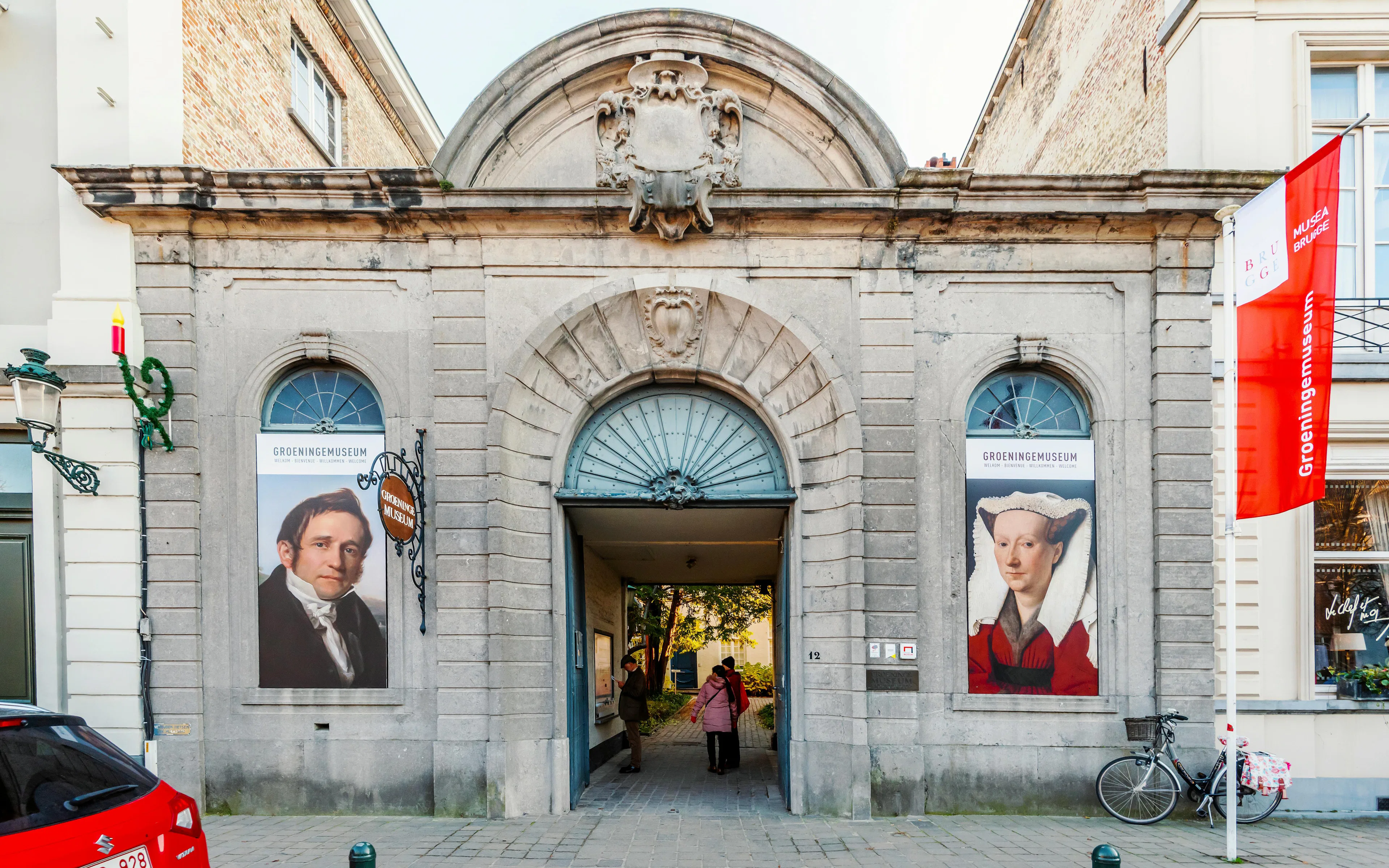
- All visitors enter through the main museum entrance at Dijver 12. Tickets are checked or purchased in the entrance and box office area before gallery access.
- Prebooked tickets may only save the box-office purchase step, while bag checks and normal entry controls still apply.
- Entry delays usually come from bag handling, not long public queues. Umbrellas, food, drinks, and damp coats may need cloakroom or locker storage before entry.
What’s included
- Standard entry gives access to the full museum route during opening hours. The Groeningemuseum collection spans six centuries of Belgian visual art.
- The visit includes the museum’s best-known Flemish Primitive works and later Belgian art. Officially named artists include Jan van Eyck, Hans Memling, Gerard David, Hieronymus Bosch, and René Magritte.
- MB Explorer is included free on-site through a QR code on your phone. It offers text, images, and audio without a separate paid audio-guide upgrade.
Ways to explore
- Standard entry suits independent visitors who prefer to move at their own pace. A typical self-guided visit takes about 1.5 hours, while a quick highlights visit can take about 45–60 minutes.
- MB Explorer adds structure without fixing your route. Bring earbuds if you want to use the audio comfortably on your phone.
- The official guided tour lasts 90 minutes and covers selected highlights with a Musea Brugge guide. Groups are capped at 15, so this format works best if explanation matters more than flexibility.
Special access & upgrades
- If you plan to visit several Musea Brugge sites within 72 hours, the official Musea Brugge Card may offer better value than a standalone entry. It includes Groeningemuseum plus other Musea Brugge museums.
- The Groeningemuseum + Historium combo pairs the museum with Historium, a separate immersive Bruges attraction in the city centre. Choose it if you want one art stop and one more narrative-format visit.
Policies
- Online tickets cannot be changed, exchanged, or cancelled after payment. Book only when your Bruges plans are firm.
- Only hand luggage smaller than 34 x 22 cm is allowed inside. Small backpacks must be carried in your hand, not on your back.
- The museum is wheelchair accessible with assistance via a ramp and has a lift. The adapted toilet is accessible, but not for electric wheelchairs.
Galleries at Groeningemuseum
Flemish Primitives & Early Netherlandish Art
18th to 19th-Century Neoclassicism
Spanning grand halls along the central route, this collection features refined portraits and dramatic historical canvases. Discover Belgian Neoclassical artists, including Joseph-Benoît Suvée and Joseph Ducq, in a calm, spacious setting.
20th-Century & Modern Belgian Art
Situated toward the end of the museum loop, this gallery displays Flemish expressionism and iconic modern works. Walk through vibrant rooms showcasing masterpieces by René Magritte, Paul Delvaux, and Permeke.
Groeningemuseum must-see artworks
1/12
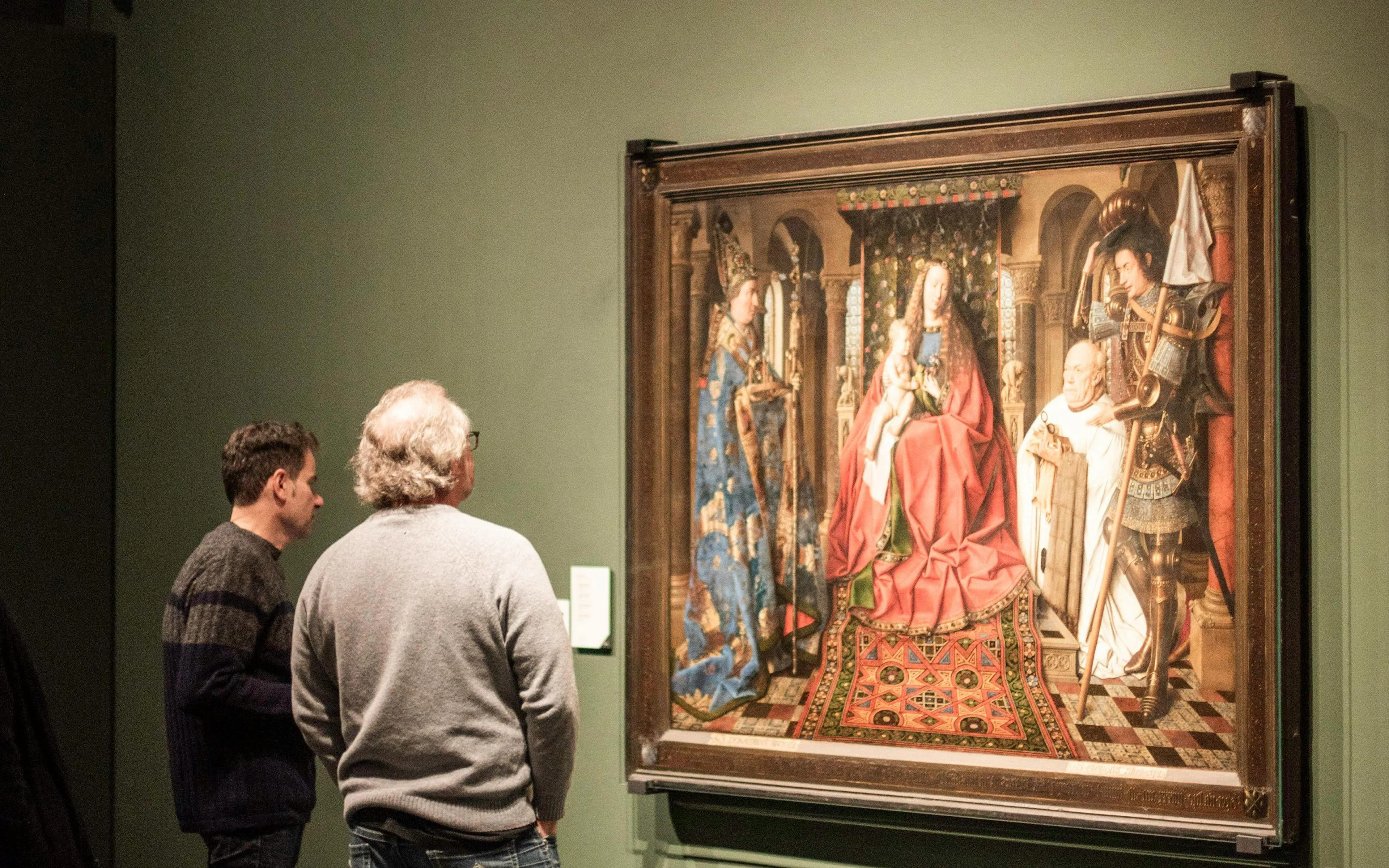
Madonna with Canon Joris van der Paele by Jan van Eyck (1436)
Location: Flemish Primitives galleries
A landmark Early Netherlandish painting. Notice the mirror-bright armour, dense fabrics, and how the kneeling canon folds seamlessly into a grand sacred setting.
Portrait of Margareta van Eyck by Jan van Eyck (1439)
Location: Flemish Primitives galleries
One of the earliest independent portraits of an artist’s spouse. Look for her alert eyes, red folded headpiece, and precise skin tones set against black.
Moreel Triptych by Hans Memling (1484)
Location: Flemish Primitives galleries
A richly detailed Bruges altarpiece combining devotion with donor portraiture. Notice the lifelike family faces, vibrant jewel-like colours, and delicate flowers scattered at the Virgin’s feet.
The Death of the Virgin by Hugo van der Goes (c.1480)
Location: Flemish Primitives galleries
An emotional late-medieval scene of final farewell. Trace the distinct facial reactions of each apostle in a tight, crowded room that heightens the dramatic vigil.
The Judgement of Cambyses by Gerard David (1498)
Location: Flemish Primitives galleries
A famous civic warning against corruption. Follow the striking two-panel narrative, highlighting exquisite period costumes, elaborate architecture, and dramatic public spectacle.
The Baptism of Christ by Gerard David (c.1502–08)
Location: Flemish Primitives galleries
A calm, luminous religious masterpiece. Look for the reflective water, soft atmospheric landscape depth, and quiet stillness surrounding the central figures.
Virgin among Virgins by Gerard David (1509)
Location: Flemish Primitives galleries
This serene devotional image turns holiness into ordered harmony. Look for the ring of female saints, patterned textiles, and the enclosed-garden calm.
The Last Judgement by Hieronymus Bosch (c.1495–1505)
Location: Flemish Primitives galleries
Bosch compresses heaven, earth, and damnation into one uneasy triptych. Notice hybrid creatures, tiny punishments, and constant movement pulling your eye across the panels.
Death and the Miser by Jan Provoost (c.1515)
Location: Later galleries
A sharp moral scene where death interrupts ordinary life. Look for the skeleton at the doorway and the tug between money, fear, and salvation.
Lord Byron on His Deathbed by Joseph-Denis Odevaere (1826)
Location: Neoclassical galleries
A poignant tribute to Romanticism and liberty. Notice the fallen helmet, Greek artefacts, and the quiet dramatic lighting honouring the famous poet’s passing.
Secret-Reflet by Fernand Khnopff (1902)
Location: Symbolism and Modern galleries
A mysterious double-panel Symbolist work. Look for the enigmatic hooded figure above and the quiet reflection of Bruges' historic canals below.
L'Attentat by René Magritte (1932)
Location: Symbolism and Modern galleries
A striking Surrealist masterpiece that plays with form and logic. Notice the unexpected blending of a torso into a face against a plain backdrop.
Plan your visit to Groeningemuseum
- Summer hours: From April 1–November 2, the museum opens 10am–6pm.
- Winter hours: From November 3–March 31, the museum opens 9:30am–5pm.
- Closed days: The museum is closed on Mondays, except Easter Monday and Whit Monday.
- Holiday hours: December 24 and December 31 close at 4pm; Ascension Day closes at 12:30pm.
- Holiday closures: The museum is closed on December 25 and January 1.
- Refurbishment: The museum is scheduled to close on January 11, 2027 for a four-year refurbishment.
Situated along the Dijver Canal in the historic city centre of Bruges, a short walk from the Burg and Market Square.
Address: Dijver 12, 8000 Brugge, Belgium
- Bus: Lines 1 or 2 → O.L.V. Kerk Stop (2-min walk)
- Train: Bruges Central Station → 15-min walk through the historic town centre
- Car/Parking: Paid underground parking nearby at Parking Katelijne or Parking Center Zand
- Restrooms: Free toilets are available inside the museum.
- Storage: Cloakroom or lockers are available for umbrellas, food, drinks, damp coats, and restricted items.
- Bag limits: Only hand luggage under 34 x 22 cm is allowed inside galleries.
- Digital guide: MB Explorer offers free QR-based text, image, and audio content on your phone.
- Families: Strollers, a nappy-changing table, toys, and a garden are available.
- Children’s activity: The free Green Feather booklet is available at the ticket desk.
- Entrance: Wheelchair users can enter via a ramp, though staff assistance may be needed.
- Inside: Wheelchair users can access the museum, and a lift serves visitor levels.
- Restrooms: An adapted toilet is available, but it is not suitable for electric wheelchairs.
- Support aids: Visitors can borrow push wheelchairs and free folding chairs for resting.
- Vision support: Visitors can borrow EnChroma glasses for colourblind viewing support.
- Hearing support: MB Explorer’s audio content is also available in text form.
- Bag policy: Only hand luggage smaller than 34 x 22 cm is allowed inside.
- Backpacks: Small backpacks are allowed only if carried in your hand.
- Food and drinks: Food, drinks, umbrellas, and damp coats must stay in the cloakroom or lockers.
- Security: Staff may ask you to open your bag and show its contents.
- Behaviour: Visitors may be asked to follow staff directions during bag inspections and entry.
- Guides: External private guides need prior written permission to operate inside the museum.
Visitor tips & guidelines
- Head to the Flemish Primitives rooms near opening, not mid-afternoon; quieter walkways make label reading easier before groups cluster.
- Don’t end your visit after the early Van Eyck and Memling galleries; later Belgian galleries with Magritte and Broodthaers are part of the payoff.
- If you have under 60 minutes, anchor on Canon Joris van der Paele first, then move straight into the later Belgian galleries.
- Stand far enough back from Canon Joris van der Paele to take in the whole composition first; close scanning hides narrative relationships.
- Use MB Explorer beside Canon Joris van der Paele or the Provoost skeleton, not on every label; selective listening prevents interpretation fatigue.
- If the Flemish Primitives rooms feel tight, continue into the later galleries and loop back; narrow walkways are harder when visitors stop to read.
- At the main entrance on Dijver, sort umbrellas, food, and damp coats before the desk; cloakroom handling creates more friction than queues here.
- Pick up The Green Feather at the ticket desk before entering the first galleries; it gives children a task in text-heavy rooms.
- Ask for EnChroma glasses at the ticket desk before the later Belgian galleries; mid-route backtracking breaks the museum’s compact room-by-room flow.
Frequently asked questions about Groeningemuseum tickets
Usually, advance booking is helpful for convenience rather than line-skipping. There are no major regular waits here, but prebooking lets you avoid any box-office purchase queue and fit the museum neatly into your Bruges day.
No. Prebooked entry may only avoid the ticket-purchase step, while bag inspections, baggage rules, and normal entry controls can still slow admission.
Usually, tickets are not presented as strict, timed-entry slots in the current official material. Treat standard admission as general entry during opening hours, with normal ticket validation and possible bag checks at arrival.
No re-entry right is allowed for standard admission. Treat your visit as one continuous session, especially because the museum is compact and most visitors finish in about 1.5 hours.
Standard tickets include the full museum route, from the Flemish Primitive galleries to later Belgian art. You can also use MB Explorer on-site at no extra charge for added text, image, and audio context.
Yes. Standard admission includes the core collection, with works by artists such as Jan van Eyck, Hans Memling, Gerard David, Hieronymus Bosch, and later Belgian names including René Magritte and Marcel Broodthaers.
Usually, yes, if your main concern is understanding the paintings rather than simply seeing them. A guided tour gives a structured highlights route, while self-guided visits suit independent visitors using MB Explorer.
MB Explorer is free on-site on your phone. Official guided tours run in Dutch, French, English, and German, with Spanish and Italian on request.
Most self-guided visits take about 1.5 hours. The official guided format lasts 90 minutes, while a focused highlights-only visit can work in roughly 45–60 minutes if you already know what you want to see.
The safest choice is near opening, when you’re less likely to meet internal pinch points around labels and narrow walkways.
Only hand luggage smaller than 34 x 22 cm is allowed inside. Small backpacks must be carried in your hand, and umbrellas, food, drinks, and damp coats need to be left in storage.
No. Online tickets cannot be changed, exchanged, or cancelled after payment. If flexibility matters, make sure your date works before you complete the booking.
Yes, with some limits. The entrance and access paths are wheelchair accessible with assistance, a lift is available, and resting aids are provided, but the adapted toilet is not suitable for electric wheelchairs.
Yes. Strollers are allowed, children under 13 enter free, and a free activity booklet helps younger visitors engage. Because the museum is text-heavy, families usually do better with a shorter highlights-focused visit.
Yes. Groeningemuseum is scheduled to close on January 11 for a four-year refurbishment. If you’re planning dates close to that period, recheck the closure notice before you finalise your visit.